Postingan

How Children Learning to Learn

How To Encourage Good Behaviour To Children Children quickly learn how to behave when they get positive, consistent guidance from you. This means giving your child attention when they behave well, rather than just applying consequences when your child does something you don’t like. 1. Be a role model Use your own behaviour to guide your child.  2. Show the children how you feel Telling your child honestly how their behaviour affects you helps your child see their own feelings in yours.   3. Catch your child being ‘good’ When your child is behaving in a way you like, give your child some positive feedback. Example: ‘Wow, you’re playing so nicely. I really like the way you’re keeping all the blocks on the table’. This works better than waiting for the blocks to come crashing to the floor before you take notice and say, ‘Hey, stop that’. 4. Keep things simple and positive Instruction should be clear, short and appropriate for your child’s age, so your child can understand an...

Learning a second language at home and at school

Gambar
      The second language is the language that children acquire after they acquire another language (Harras and Bachari, 2009:71).  Language acquisition is closely related to how children acquire words, meanings, structures, and pragmatics. It is nothing but related to the processes that occur in the minds and attitudes of children. BILINGUALISM Having or using two languages, especially those spoken with fluency characteristics of native speakers. Have a minimum competence in only one of the four language skills in Early Bilingualism The 'simultaneous acquisition' is the process of the earliest chance of learning two languages or more. It starts at birth. • Bilingual children generally appear to develop more slowly in linguistic terms. They may say their first words a little later and learn fewer words and grammatical structures. Some benefit being Billingual Metalinguistic awareness  = Their ability to manipulate and label language. As they are exposed to ...

Research in the primary English Classroom

     Educational research seeks to solve a problem. Research involves collecting new data from primary or first-hand sources or using existing data for new purposes. Research is based on observable experience or empirical evidence. Research demands accurate observations and descriptions. Basic English classes are English classes designed for young learners who are just starting to learn English from basic lessons.      But teaching English in elementary schools is a new trend, even in Indonesia itself for elementary schools that are not taught English. In this case, Lando suggested that it is necessary to consider the implementation of teaching English since the initial education level, namely in elementary school, to achieve better results. in the English language skills of students at the higher education level. Teaching English in primary schools should be seen as an innovative way to improve English teaching in general (Liando, 2000).  However, in ...

ASSESSMENT

Gambar
       Assessment       Assessment is an effort to obtain data/information from the learning process and results to find out how well the performance of the child, class, or study program is compared to certain learning objectives/criteria/achievements. After obtaining the results of the assessment, the assessment process is carried out. Assessment (grading) is the process of embedding attributes or dimensions or quantities (in the form of numbers/letters) to the results of the assessment by comparing them to a certain standard instrument. The results of the assessment in the form of attributes/dimensions/quantities are used as evaluation materials. Evaluation (evaluation) is the process of giving a status or decision or classification of an assessment and assessment result. Effective language assessment provides chances for children to use their abilities to demonstrate what they can do at their appropriate level. It requires acknowledgment of th...

Material evaluation and material design young learners

  Material evaluation and material design young learners      Recent years have seen a dramatic increase in the use of commercially produced foreign language coursebooks as core teaching materials in young learner classrooms. In many cases, the approaches taken and the methods advocated in these materials are accepted uncritically by the teachers using them regardless of their teaching context. Teachers in some contexts also do not have a choice and are forced to ‘teach the book’ and implement methodologies that they may not agree with. However, in both cases, there is a huge risk of not doing what is best to promote learning. To avoid this possibility a more critical stance towards language learning materials is needed.       Materials will be considered anything which is used to help language learning (Tomlinson, 1998). Examples include but are not limited to: course books, workbooks, CDs, flashcards, and CD-ROMs. Materials evaluation will be co...

Teaching Writing and Reading to young learners

 Teaching Writing and Reading to young learners      The successful student in learning English stems from English teacher competencies in designing classroom activities and in implementing an appropriate strategy in teaching English. Moreover, students in the growth period need the right strategy to acquire and to habitual language. The strategy which is used in the teaching and learning process is very important because it can help students to participate actively in the classroom and become self-directed.      Young learners of English, as a foreign language, are exposed from their early years of learning to read and write in English through the textbooks they use. Concerning the students’  reading skills,  the texts in the coursebook are not authentic.  As far as writing skills are concerned, students usually must read a model text and produce a similar piece of written language without having a real audience and purpose in mind ...

Teaching listening and speaking to young learners

  Teaching listening and speaking to young learners The skill of communicating in English in the global world today is considered one of the most required life skills. This growing need might be the cause for parents to send their young children to schools that provide English programs. The implementation of TEYL in several countries is based on some rationales. English should start with an emphasis on listening and then speaking. these are two main skills to teach first because children often cannot read and write at all yet, or not with much confidence. Young learners need to start with plenty of listening practice, and opportunities to listen to rich input will naturally lead to speaking tasks. in this way listening and speaking can be truly integrated into the primary English classroom. Teaching Listening Teaching young learners is really very challenging. Teachers are not only to understand methodologies but also have skill and teaching competencies.  How can teachers sca...

Policy: primary ELT programme

Gambar
Policy: primary elt programme  While ever more young learners in formal primary education learn English as a second or foreign language as part of their compulsory curriculum, the circumstances of learning and teaching vary a great deal.  The status of English is a very important variable in a given country. In some contexts, very high stakes will be attached to English because children have to shift to English from their mother tongue in order to access secondary and tertiary education. This happens in many African countries. While in Japan, the stakes are not quite so high. English is desirable, but without it, children can still progress to good schools and successful careers. Whatever its status, it is also important to consider learners’, teachers’, and parents’ attitudes to English. In this case, these beliefs and attitudes are still malleable. Children whose parents speak any language and have wide knowledge about other cultures will certainly be able to develop positiv...

The 3rd INTERNASIONAL CONFERENCE ON EDUCATION AND SCIENCE

Gambar
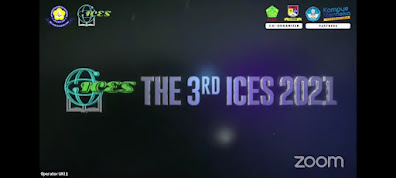
  On Wednesday 18, 2021, a webinar on T he 3rd INTERNATIONAL CONFERENCE ON EDUCATION AND SCIENCE was well held. where there are several teachers or lecturers who follow and share some of the activities they implement in the schools they teach and also some of the teachers tell some journals that they research for teaching in this covid condition and how to overcome them. This webinar has the theme " Research and education sustainability post-COVID-10 in Asian context." This event was hosted by our own lecturer, Mam Asri, and also for the moderator of the event, Sir Lamhot and for room 1 it was moderated by Sir Male.      What is interesting about this educational discussion is the speaker Dr. Associate Professor Wenli Chen as Head of Learning Sciences and Assessment (LSA). in his explanation, he presented material on Supporting Effective Collaborative Learning In the Classroom: Technological and Pedagogical design. he told about the Singapore Educational Technolog...

Learning The First Language at Home and at School

Gambar
       Every human being has the same potential to master language. The process and nature of each person's language acquisition take place dynamically and through tiered stages. In this regard, two terms are known, namely language acquisition and language learning. The acquisition of the first language occurs when the child who was original without a language has now acquired one language. During the acquisition of children's language, children are more focused on the function of communication than the form of language.      We all know that the acquisition of a first language is also closely related to the social development of children and therefore also closely related to the formation of social identity. Learning the first language is one way of tracing the overall process of a child's development to become a full member of a society. Through language, children can easily express their ideas and desires in a way that is truly socially acceptable. ...

Teaching English to Young Learners “Learning & Development”

Gambar
    Learning and Development are to build connections between organizational needs and individual needs to boost Performance. It’s an integral part of an organization’s operation.   Development and learning are dynamic processes that reflect the complex interactions between a child's biological characteristics and the environment, each shaping the other's growth patterns and futures. Advances in neuroscience over the past two decades have provided new insights into the process of early brain development and its long-term implications for development and learning. These findings provide strong evidence supporting the importance of high-quality early learning experiences for children to promote children's lifelong success. The neural connections in the brain—which are the basis for all thinking, communication, and learning—are formed most rapidly in childhood. The process of forming new neural connections and pruning unused neural connections continues throughout a person...